
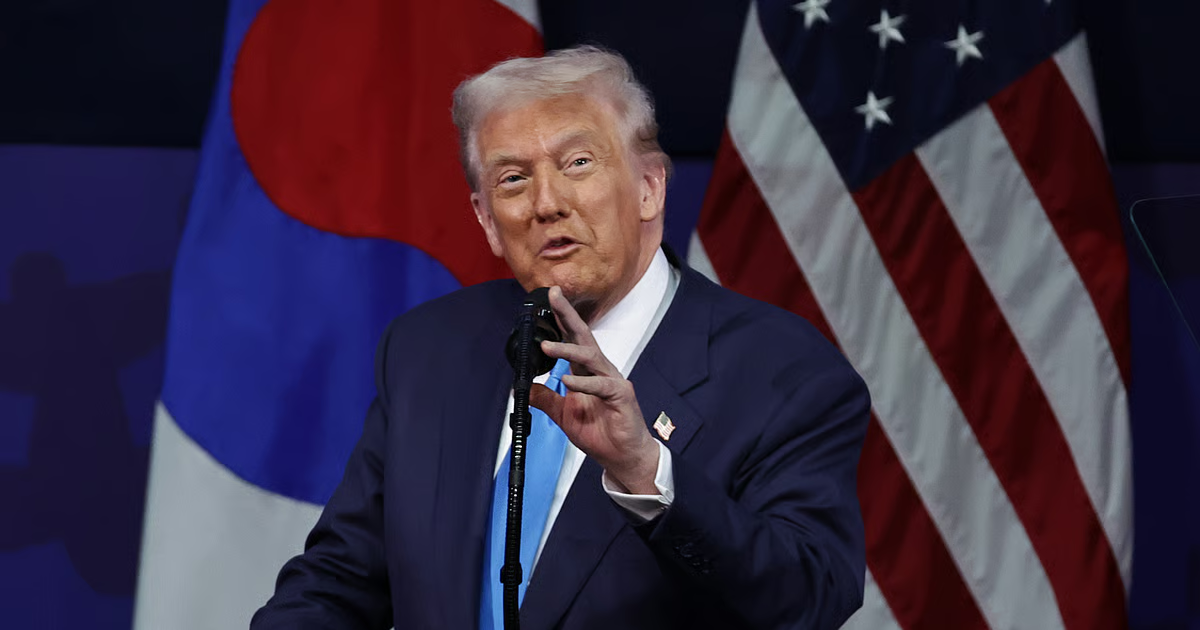

US President Donald Trump signed an executive order to prevent states from developing their own regulations for artificial intelligence, maintaining that the US cannot be suffocated by rules that benefit China.
Members of Congress from both parties, as well as civil liberties and consumer rights groups, have been pushing for more regulations on artificial intelligence (AI), saying powerful technology needs adequate oversight.
Trump’s argument, according to what he told reporters Thursday in the Oval Office, is that “there will be only one winner” in the countries’ race for AI dominance, and China’s government offers Chinese companies a single place to obtain government approvals.
“We have big investments coming, but if they had to get 50 different approvals from 50 different states, forget it, because it’s impossible to do that,” Trump said.
The executive order instructs the U.S. Attorney General to create a team exclusively dedicated to challenging state AI laws, as well as instructing the Department of Commerce to develop a list of problematic regulations.
It also threatens to restrict funding for a broadband deployment program and other grant programs in states with AI laws.
David Sacks, a venture capitalist with extensive investments in AI who is leading Trump’s policies in the realm of cryptocurrencies and artificial intelligence, announced that the Trump Administration will only reject “the most onerous examples of state regulation”, and will not oppose “child safety” measures.
Four US states — Colorado, California, Utah and Texas — have passed laws establishing rules for AI in the realm of privacy protection, according to the International Association of Privacy Professionals.
These laws include limiting the collection of certain personal information and requiring more transparency from companies.
Laws are a response to these AI activities, which already permeate everyday life. Technology is being applied in many areas and determining important decisions for citizens, including who gets a job interview, a lease, a home loan and even certain medical care. Research shows that this technology makes mistakes in these types of decisions, such as, for example, prioritizing a certain gender or race.
States’ most ambitious AI regulation proposals require private companies to provide transparency and assess the potential discrimination risks of their AI programs.
In addition to these more comprehensive rules, many states have regulated parts of AI: banning, for example, the use of ‘deepfakes’ in elections, or the creation of pornography, or even establishing rules on the use of AI by the Government itself.